What a Good Bitcoin Mining Hosting Provider Should Offer
A low price per kWh gets your attention. These eight things are what keep your machines earning for years. Use them as a checklist before you ship a single miner.

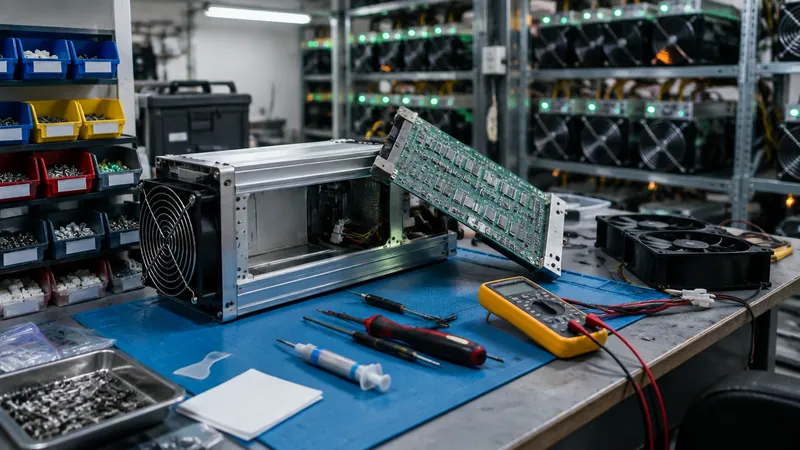
The best hosting providers don't just offer cheap power. They give you a choice of locations, one clear price with no service fees on top, uptime they're willing to publish, on-site repairs backed by a real warranty, monitoring you can see yourself, flexible ways to pay, and real people on the channels you already use. Ownership of your machines and the terms of the contract should be clear before you pay.
Choosing a hosting provider is a bigger decision than choosing a machine. A miner lasts a few years. The provider decides how many hours of those years it actually runs.
After reviewing a lot of hosting offers on our board, these are the things that separate the providers we'd trust with our own machines from the rest.
1. A choice of locations
The best providers don't offer one site. They run capacity in several countries, on different power sources and climates: gas, hydro, grid and renewables, from the Arctic to the Gulf.
That choice matters. It lets you pick the balance that suits you between price, jurisdiction and risk, and it lets you spread your machines so one outage or one rule change doesn't take everything offline.
2. One clear price, no service fees on top
A rate per kWh should be the price, full stop. Watch out for monthly per-machine service fees, setup fees and install fees that turn a cheap headline rate into an expensive one.
The providers worth working with quote one all-in number and say plainly that there are no service fees on top. If a host can't tell you your all-in cost per machine per month in one sentence, keep looking.
3. Uptime they're willing to publish
Every machine that's offline is earning nothing while it ages. Good providers publish their uptime, typically 98% or more, and will show you the history behind it.
Ask what happens when a machine goes down: how fast it's noticed, who fixes it, and whether you pay for power while it's offline.
4. Repairs on site, and a warranty that means something
Hashboards and fans fail. What matters is how fast a broken machine is back online. Look for a provider with technicians and a repair bench on site, spare parts on hand, and clear turnaround times.
The strongest providers also stand behind the hardware for the long term, with multi-year warranty coverage instead of a few months. That says a lot about how confident they are in their own operation.
5. Monitoring you can see yourself
You should never have to email someone to find out whether your machines are running. A good provider gives you a dashboard with hashrate, temperatures and status per machine.
The better ones go further, with automatic management software that tunes and adjusts your machines to the conditions instead of leaving them on factory settings. Either way, your hashrate should also be visible in your own pool account.
6. Flexible ways to pay
Buying a fleet of machines upfront is a large commitment. Some providers now let you start with part of the price and pay the rest in instalments over a few months. That lowers the barrier to starting, and lets your machines earn while you pay for them.
7. Real people, where you already are
When a machine goes offline on a Sunday, a ticket system with a 48-hour reply time is not support. The providers worth working with answer on the channels miners actually use, like WhatsApp, Telegram and email. They also offer a consultation before you commit, to help you pick the right machines and location.
8. Clear ownership and clear terms
Before you pay, you should know:
- Which machines are yours, with serial numbers on your invoice
- That the hashrate goes to your pool account and the coins to your wallet
- What happens during curtailment
- How long the contract runs and how you leave it
- How your machines come back to you if you do
The checklist
| Ask | A good answer |
|---|---|
| Where can my machines run? | Several sites, countries and power sources to choose from |
| What's my all-in price? | One rate per kWh, no service or install fees on top |
| What's your uptime? | 98% or more, with history to show |
| Who repairs my machines? | Technicians and spare parts on site, plus a multi-year warranty |
| How do I see my machines? | A live dashboard, and my own pool account |
| Do I have to pay everything upfront? | No, instalment options are available |
| How do I reach you? | WhatsApp, Telegram or email, with real people answering |
| Are the machines mine? | Yes, serial numbers on my invoice, and I can ship them out |
The bottom line
Cheap power is only the start. The hosting providers that earn long-term customers are the ones that make every part of the deal visible: the location, the price, the uptime, the repairs and the people behind them. If a provider ticks all eight boxes, the price per kWh is the easy part of the decision.
You can compare hosting offers from providers on our board, by country, price and power source, at cryptosites.io.
CryptoSites.io is a marketplace for powered land, mining sites and hosting capacity worldwide. Some hosting providers listed on cryptosites.io are partners of CryptoSites.io. This article is general information, not financial advice.
Looking for a mining site or hosting?
Browse powered land, mining sites and hosting worldwide. A free account opens the full details of our highlighted sites.
Keep reading
All of Miners Digest →
Which Mining and Crypto Conferences Are Worth It If You Buy, Sell or Host Mining Sites (2026-2027)
Not every crypto conference is useful for site deals. Here is where power developers, hosting buyers and mining capital actually meet, and how to turn a few days on the floor into real conversations.
Buying a Distressed Bitcoin Mining Site: What You Are Really Buying
Bankruptcy sales, lender foreclosures and motivated sellers can offer megawatts at a discount. The discount is only real if the power contract, the permits and the equipment title come with it.
The Moratorium Map: Where US Towns and States Are Blocking Mining and AI Data Centers
Cheap electricity and a grid connection are no longer enough. Local permission has become one of the biggest risks in any US site deal, and it can change faster than a power contract.