Buying a Distressed Bitcoin Mining Site: What You Are Really Buying
Bankruptcy sales, lender foreclosures and motivated sellers can offer megawatts at a discount. The discount is only real if the power contract, the permits and the equipment title come with it.

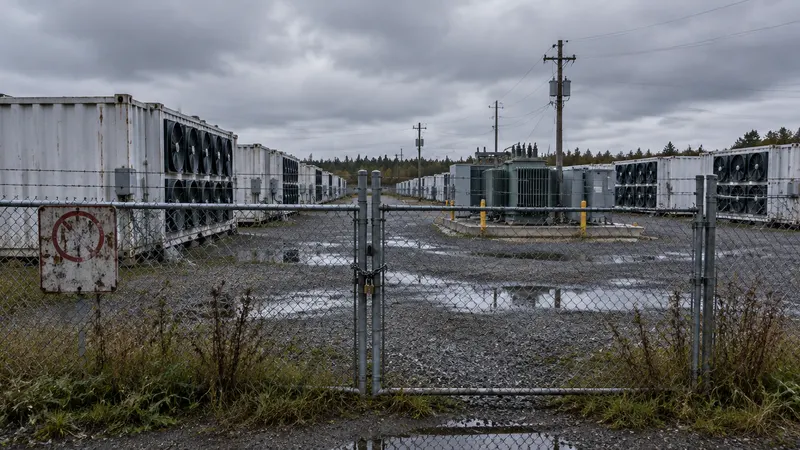
Distressed mining sites come from bankruptcies, lender takeovers and owners who are running out of cash. The cheap price is real, but so are the traps. The most valuable piece is usually the power contract and interconnection, and it is also the most fragile: it may not transfer, it may come with unpaid bills, or it may be rejected in court. Before you bid, find out who owns each transformer, container and miner, which liens sit on them, whether the permits survive the sale, and what it would cost to get the same power somewhere else.
Every mining cycle leaves sites behind. Hashprice falls, debt comes due, and a strong operator suddenly needs a buyer. For a buyer with cash, that can be the best time to pick up energised megawatts, and the most expensive time to make a mistake. This guide covers what is different about a distressed deal. For the basics of checking any site (power, tariff, zoning, cooling), read How to Evaluate a Bitcoin Mining Site first.
Where distressed deals come from
There are three main routes.
- Bankruptcy sales. The operator files for court protection and sells assets under court supervision. In the US this is usually Chapter 11 and a "363 sale".
- Lender foreclosure. The operator defaults and the lender takes the collateral, then sells or runs it.
- Motivated sellers. No court and no foreclosure yet, but the owner needs to sell before one of those happens. These are often the cleanest deals, because there is still time to do things properly.
The 2022 downturn produced several court cases. Compute North, a large hosting provider, filed for Chapter 11 in September 2022 after its main lender declared a technical default, as CoinDesk reported. Core Scientific, then one of the biggest listed miners, filed on 21 December 2022 and emerged on 23 January 2024, according to its 8-K filing.
Who really owns the transformers, containers and miners?
On a distressed site, ownership is often split.
- Miners may be pledged to an equipment lender, or owned by hosting clients.
- Containers and transformers may be leased, financed, or owned by a joint venture partner.
- The land may be leased, with rent overdue.
- The substation may belong to the utility, a partner or a separate company in the group.
Compute North's sale is a good example. When its lender, Generate Capital, bought the company's stake in two large sites for $5 million, the deal did not cover assets owned by third parties that were used at the sites. If you assume everything inside the fence is included, you can overpay badly.
What to do: ask for an asset register that lists every major item, its serial number, its owner and any lien on it. Then run lien searches (UCC filings in the US, or the local equivalent) in every name the seller has used.
The power contract: the most valuable and most fragile piece
Land, containers and miners can be replaced. Energised power at a good price usually cannot, at least not quickly. That makes the power contract and interconnection the real asset, and the easiest to lose. Check:
- Can it be assigned? Many power and interconnection agreements need the utility's consent to transfer. Some cannot be transferred at all. Get the clause in writing and, ideally, a letter from the utility.
- Is it complete? A queue position or a half-built connection is not the same as live power. In the Compute North sale, the purchase agreement noted that the Wolf Hollow site's connection to the Texas grid had not been completed.
- Can it be rejected? In US bankruptcy, a debtor can ask the court to reject contracts it no longer wants. In December 2022, Core Scientific asked the court to reject its hosting contracts with Celsius Mining, its largest client with over 37,000 machines, and the judge approved it in January 2023, according to CoinDesk. If your plan depends on someone else's contract, know who can cancel it.
- Curtailment terms. Cash-hungry operators sign poor terms. See curtailment risk in mining power contracts.
Unpaid utility bills and deposits
An operator in trouble often stops paying the power bill before anything else. Find out:
- How much is owed to the utility, and whether the utility will make the new owner pay it before restoring or keeping service.
- Whether there is a security deposit or letter of credit with the utility, and who gets it back. A new owner usually has to post its own.
- Whether hosting clients paid deposits. In the Compute North case, Marathon held $40 million in hosting deposits and was the largest unsecured creditor. Those claims affect who has a say in the sale.
Permits and environmental issues
Permits do not always follow the asset, and a distressed operator may have let some lapse. Check which permits are issued, which are expired, and which are under challenge.
Greenidge shows how long a permit fight can last. New York's environmental regulator denied the renewal of the air permit for its Dresden plant in 2022, and a state judge annulled that denial and sent it back for review in November 2024, as the Rochester Beacon reported. A buyer of a site in that kind of dispute buys years of uncertainty.
Also look for environmental liabilities that pass with the land: fuel spills, unpermitted clearing or building, and noise complaints.
Equipment title and condition
Idle equipment ages fast. Before paying:
- Confirm title for each lot of miners and get a bill of sale free of liens.
- Test a sample of machines on site. Hash boards, fans and power supplies fail after months in a damp container.
- Check transformers for oil leaks, test reports and nameplate ratings.
Bankruptcy timelines, explained simply
In the US, most distressed site sales run through Section 363 of the Bankruptcy Code. The basics:
- Stalking horse. The seller first signs a deal with one buyer. That bid sets the floor. In return, the stalking horse usually gets protections such as a break-up fee if someone else wins.
- Bid procedures. The court approves the rules: deadlines, deposits, and what counts as a qualified bid.
- Auction. If other qualified bids arrive, there is an auction. If not, the stalking horse wins. In Compute North's case, no other qualifying bids arrived for the two sites Generate Capital agreed to buy, so the planned auction was cancelled.
- Credit bids. A secured lender can bid the debt it is owed instead of cash. Foundry used a credit bid of about $9 million on its loan collateral in the same case, according to Hashrate Index. That makes it hard for an outside buyer to compete for assets that secure a large loan.
- Sale order. The court approves the sale. A 363 order can deliver assets "free and clear" of many liens, which is a big advantage over a private deal. But it does not fix everything: a utility can still refuse to transfer a contract, and permits still depend on the regulator.
Timelines are short, often weeks. Have your diligence team, lawyer and funding ready before you open the data room.
How to price a distressed site
Start with the question: what would it cost, in money and time, to get the same power somewhere else?
- Power first. Value the energised megawatts by the cost and waiting time of a new interconnection of the same size in the same market. If a new connection takes years, live power is worth a premium, even in poor condition.
- Equipment second. Price containers, transformers and miners at today's market value, less repairs.
- Subtract the problems. Unpaid bills, overdue rent, permit risk and repairs all come off the price.
Real results vary widely. In the Compute North sale, Foundry bought facilities at Big Spring, Texas (11 MW) and North Sioux City, South Dakota (6 MW), including miners, containers and transformers, for $4 million, while a facility in Corpus Christi, Texas received no bids at all, per Hashrate Index. In 2023, Core Scientific sold Celsius a partially developed, non-operational site in Cedarvale, Texas with 215 MW of available power for $14 million plus the release of $31 million in claims, as part of a settlement, reported by crypto.news. Neither is a benchmark. The price depends on the power, the paperwork and who else is bidding.
Short due-diligence checklist
- Asset register with owner and lien status for every major item
- Lien and judgment searches in every entity name
- Power and interconnection agreements, with the assignment clause and the utility's written position
- Last 12 months of power bills and the current amount owed
- Deposits and letters of credit: who posted them, who gets them back
- Land title or lease, and rent status
- All permits, expiry dates and any challenges
- Environmental and noise history
- On-site equipment test and transformer reports
- In a court sale: bid procedures, deadlines, stalking-horse terms and the draft sale order
For buyers and owners
For buyers: the discount is in the price, the risk is in the paperwork. Pay for power you can keep, equipment you own outright and permits that survive the sale. Everything else is a bonus.
For owners: if you can see trouble coming, sell early. A motivated seller with a clean data room, a current power bill and a utility letter on the contract gets a far better price than a debtor in a 30-day auction. Put the documents together now, while you still control the timeline.
Find powered sites on the map at cryptosites.io, or list your site quietly through the listings desk.
CryptoSites.io is a marketplace for powered land, mining sites and hosting capacity worldwide. Facts in this article come from the public sources linked above as of 9 October 2026. Bankruptcy and insolvency rules differ by country and change over time. This article is general information, not legal or financial advice. Use a qualified lawyer before bidding on or selling a distressed asset.
Looking for a mining site or hosting?
Browse powered land, mining sites and hosting worldwide. A free account opens the full details of our highlighted sites.
Keep reading
All of Miners Digest →
Which Mining and Crypto Conferences Are Worth It If You Buy, Sell or Host Mining Sites (2026-2027)
Not every crypto conference is useful for site deals. Here is where power developers, hosting buyers and mining capital actually meet, and how to turn a few days on the floor into real conversations.
The Moratorium Map: Where US Towns and States Are Blocking Mining and AI Data Centers
Cheap electricity and a grid connection are no longer enough. Local permission has become one of the biggest risks in any US site deal, and it can change faster than a power contract.
Curtailment Risk: What Happens When the Utility Cuts Your Power (and How to Protect Your Contract)
Every mining site can lose power on someone else's schedule. The clauses in your power or hosting contract decide whether that is a short pause or a serious loss.