Bitcoin Difficulty Is Down 15% From Its Peak. Should You Buy a Mining Site Now?
Lower difficulty means each machine earns more bitcoin. But difficulty follows hashrate, and hashrate can come back fast. Here's how to price a site on a range, not on today's number.

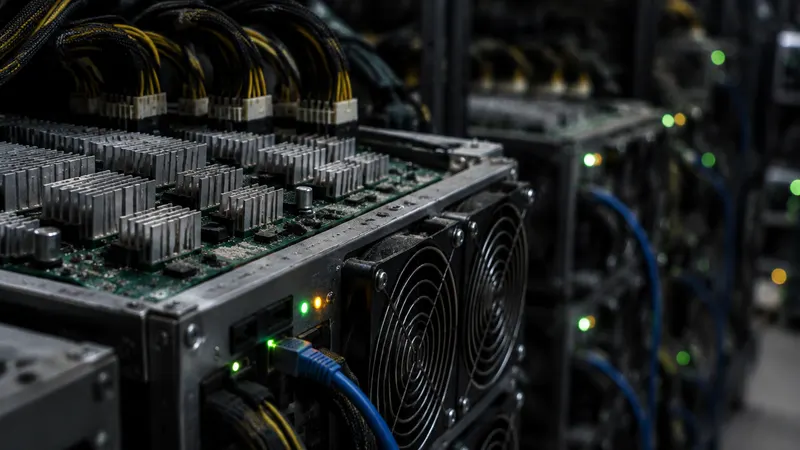
Bitcoin mining difficulty was 132.72T on 9 October 2026, about 15% below its peak of 155.97T in October 2025. Hashrate is down by a similar amount. That lifts revenue per machine, and some sites look cheaper to run than a year ago. But difficulty has already climbed about 6% from its June low, and another rise of about 4.6% is estimated for mid-October. In our 10 MW example, a 20% swing in difficulty moves payback from about 2.3 years to about 6.7 years. Buy on a range of outcomes, never on the current dip.
Difficulty is the number that decides how much bitcoin your machines earn. When it falls, every terahash earns more. When it rises, every terahash earns less. Right now it is well below last year's high, and that is making some buyers ask whether this is the moment to buy a site.
It might be. But only if the deal still works when difficulty goes back up.
Where difficulty and hashrate stand
We read the live data from mempool.space on 9 October 2026:
- Current difficulty: 132.72T, set at the adjustment on 3 October (a change of -0.03%).
- Peak difficulty: 155.97T on 29 October 2025.
- Lowest since the peak: 124.93T on 14 June 2026, about 19.9% below the peak.
- 7-day average hashrate: about 984 EH/s, against a 7-day peak of about 1,153 EH/s in mid-October 2025. That is roughly 15% lower.
The mempool.space difficulty estimate on the same day pointed to the next adjustment around 16 October 2026, with an estimated change of +4.58%. That estimate was taken about halfway through the period, so it can still move.
Some news reports put the decline closer to 20%. They are measuring from the peak to the summer low, not to today. Since June, difficulty has recovered about 6%.
Why difficulty fell
Difficulty adjusts every 2,016 blocks, about every two weeks, to keep blocks coming roughly every ten minutes. If machines switch off, blocks slow down and difficulty drops. If machines switch on, it rises.
Two things pushed machines off the network this year.
Low revenue. Hashprice, the income from one petahash per day, fell from about $63 in July 2025 to a June 2026 average of about $27.7 (CoinShares) and was still about $31.80 in mid-August, according to CoinDesk. CoinDesk described hashrate falling from about 1.14 ZH/s at the peak to about 900 EH/s (daily estimates, which swing more than the 7-day averages above) as one of the longest capitulation cycles on record. We covered which fleets still make money at today's level in Hashprice Near $40.
AI and HPC pivots. Large miners have been moving power from bitcoin to AI data centers. The same CoinDesk article cites CoinShares data showing $70 billion in cumulative AI and HPC contracts across the industry by the end of Q1 2026, and Riot Platforms signing a 20-year lease valued at $9.1 billion. Every megawatt that goes to AI is a megawatt that no longer mines.
Why it can reverse quickly
Difficulty is not a slow-moving number. It follows hashrate with a lag of about two weeks, and hashrate can return as fast as machines can be plugged in.
The mempool.space history shows how sharp the swings can be. On 7 February 2026, difficulty fell 11.16%. At the next adjustment on 19 February, it rose 14.73%. In June it fell 10.09%, then rose 7.15% two weeks later.
Three things can bring hashrate back:
- A higher bitcoin price. CoinShares estimates that a return to $126,000 could lift hashprice to about $59, per CoinDesk. At that level, many switched-off machines would switch back on.
- New-generation machines. Efficient models keep shipping. Each new fleet adds hashrate even when prices are flat.
- Idle sites restarting. Machines that were curtailed or paused can return in days, not months.
The AI pivot is the one force that removes capacity more permanently.
A worked example: 10 MW, three scenarios
Here is a simple model. Every input is an assumption, stated so you can change it.
Assumptions:
- 10 MW of power to the machines.
- Fleet efficiency of 17 J/TH. That gives about 588 PH/s of hashrate.
- 95% uptime.
- Power price of $50/MWh (5¢/kWh).
- Other running costs (staff, repairs, pool fees, cooling) of $10/MWh.
- Base hashprice of $40/PH/day. Hashrate Index put it at $39.87 on 28 September (roundup). Using mempool.space difficulty and a bitcoin price of $82,658 on 9 October, our own subsidy-only estimate is about $39.15.
- A total purchase cost of $12 million for site and machines. This is an illustration, not a market price.
Bitcoin price and fees are held constant, so only difficulty changes.
One detail matters here. Revenue moves with the inverse of difficulty. A 20% fall in difficulty lifts hashprice by 25%, not 20%. A 20% rise cuts it by about 17%.
| Scenario | Difficulty vs today | Hashprice | Revenue per day | Net cash per day | Net cash per year | Simple payback |
|---|---|---|---|---|---|---|
| Bull | -20% | $50.00 | about $27,900 | about $14,300 | about $5.2M | about 2.3 years |
| Base | today | $40.00 | about $22,400 | about $8,700 | about $3.2M | about 3.8 years |
| Bear | +20% | $33.33 | about $18,600 | about $4,900 | about $1.8M | about 6.7 years |
Power costs about $11,400 a day and other costs about $2,300 a day in every scenario. Those are fixed. Revenue is not. That is why a 20% move in difficulty changes net cash by about 43% to 64%.
Two warnings about this table:
- It ignores the next halving. The subsidy is expected to halve again in 2028. A 6.7-year payback runs straight through it, and the second half of that period would earn much less. Our guide on what the halving means for mining explains the effect.
- It ignores machine ageing. A 17 J/TH fleet is competitive today. In three or four years it may look like today's older fleets.
To run this with your own numbers, follow our guide to calculating miner profitability.
How to model a site purchase properly
Do not price a site on today's difficulty. Price it on a range.
- Set a bear, base and bull case. A ±20% swing in difficulty is a reasonable start. Add a bitcoin price range on top.
- Make the bear case survivable. If the deal only works in the base or bull case, it is a bet, not an investment.
- Assume difficulty drifts up over time. Over most of bitcoin's history, hashrate has grown. Treat a long period of falling difficulty as the exception.
- Separate the site from the fleet. Value the power, land and permits on their own. Machines lose value. Cheap, firm power keeps it.
What to check in a deal now
Power price and contract length. A low rate for 12 months is worth far less than a fixed rate for five years. Ask for the contract, the term, any price escalators and whether it transfers to you.
Curtailment terms. Some sites earn credits for switching off during grid stress. Others are simply cut off. Find out how many hours were curtailed last year and who gets paid for it.
Equipment. Check the fleet's J/TH, age, repair history and warranty. In our example, a fleet at 25 J/TH would earn about $67 per MWh at a $40 hashprice, against about $98 for the 17 J/TH fleet. That gap decides whether the site survives the bear case.
Why the owner is selling. In a low-difficulty market, many sellers are leaving because margins collapsed. That is fine if the problem was the fleet. It is a warning if the problem was the power.
The trap: buying on a temporary dip
The most common mistake is simple. A buyer sees strong margins at today's difficulty, prices the site on those margins, and pays too much. Then hashrate returns, difficulty climbs, and the payback period doubles.
Difficulty has already recovered about 6% since June, and the next estimate points up again.
A good deal in this market has three things: power cheap enough to survive the bear case, a contract long enough to cover the payback, and a price that does not assume today's difficulty lasts.
For buyers and owners
For buyers: build your offer on the bear case, and treat lower difficulty as upside. If the numbers only work at 132T, walk away.
For owners: buyers will test your site against a higher difficulty than today. Show them your power contract, curtailment history and fleet data up front. A site that clears the bear case is worth more, and it sells faster.
Compare sites and country power prices on the map at cryptosites.io, or list your site through the listings desk.
CryptoSites.io is a marketplace for powered land, mining sites and hosting capacity worldwide. Difficulty, hashrate and bitcoin price figures are from mempool.space as read on 9 October 2026. Hashprice and market figures are from Hashrate Index and CoinDesk. The worked example and scenarios are our own calculations based on stated assumptions. All figures change daily. This is not financial advice.
Looking for a mining site or hosting?
Browse powered land, mining sites and hosting worldwide. A free account opens the full details of our highlighted sites.
Keep reading
All of Miners Digest →
Where the World's Hashrate Is Moving in 2026 (and What It Means for Site Prices)
The network stopped shrinking in Q3 2026, but the map underneath it is still changing fast. Developed markets are giving up hashrate to AI, while a group of energy-rich countries keeps absorbing new machines.
Hashprice Near $40: Which Mining Sites Still Make Money (and Which Owners Will Sell)
At about $40 per PH per day, a fleet's efficiency sets a hard ceiling on the electricity cost it can afford. Here's where that ceiling sits, who is under pressure, and what it means for anyone buying a site.
Where to Mine Bitcoin in 2026: Comparing Regions by Power, Climate and Risk
North America, the Nordics, the Middle East, Africa and Latin America all host serious mining today. Here's how they compare on power price, climate, reliability and risk, using hosting prices from our own board.