Should You Buy or Lease a Bitcoin Mining Site?
Owning a site gives you control and an asset. Leasing gets you running faster with less capital. Here's how to decide, and what to check in either kind of deal.

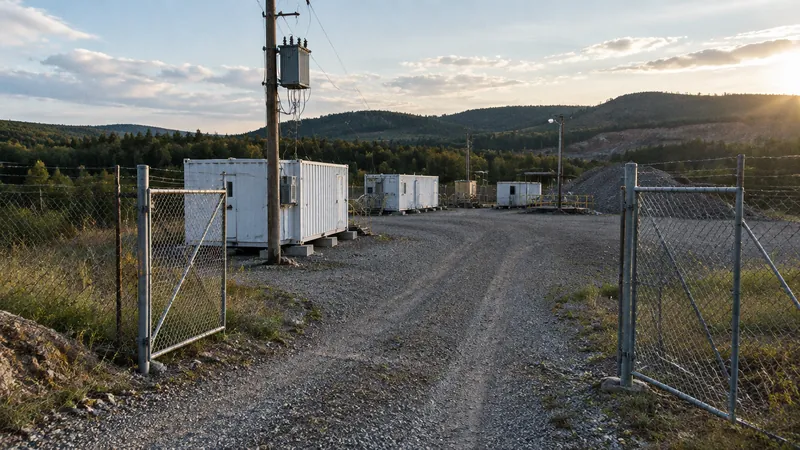
Buying a mining site ties up more capital but gives you control, an appreciating asset and freedom to switch between mining and other uses like AI compute. Leasing is faster and lighter on capital, but your landlord's terms limit what you can do and for how long. If you plan to operate for many years at scale, owning usually wins. If you want speed and flexibility, leasing often does. Either way, the power agreement matters more than the land.
Once you've decided to run your own machines rather than host them, the next question is whether to own the site or rent it.
The case for buying
Control. You decide how the site is built, cooled, expanded and used. Nobody can refuse to renew your lease.
An asset that can grow in value. Powered land has become scarce, as miners and AI builders compete for the same sites. A site you own can be worth more in a few years than it is today.
Flexibility. If mining margins fall, an owned site with good power can be leased to others, converted to other computing, or sold.
Downsides - More capital up front, and more due diligence. - You carry all the risk: power contracts, permits, maintenance and local rules. - Selling takes time if you need to exit.
The case for leasing
Speed. An existing, energized site can have machines running in weeks instead of months.
Less capital. Your money goes into machines, the part that actually earns, instead of land and buildings.
Lower commitment. At the end of the term you can move to cheaper power or a better site.
Downsides - The landlord sets the rules: what you can build, how you cool, whether you can expand. - Renewal isn't guaranteed, and rent can rise. - You don't benefit if the site's value goes up.
What to check before buying
- Power: is it energized today, under what contract, at what price and for how long? (See how to evaluate a mining site.)
- Infrastructure: who owns the substation and transformers, and what condition are they in?
- Title, zoning and permits: can the land legally be used for mining, and do permits transfer to you?
- Neighbours and noise: any complaints or local rules that could limit operations?
- Exit value: who else would buy this site if you ever needed to sell?
What to check before leasing
- Term and renewal: how long, and on what terms can you extend?
- What's included: power, infrastructure, cooling, security, maintenance?
- Power pass-through: is power billed at cost, with a markup, or at a fixed rate?
- Curtailment: who decides when the site switches off, and who gets the credits?
- Exit and removal: what happens to your equipment when the lease ends?
- Expansion rights: can you add capacity if more power becomes available?
A simple way to decide
| You should lean toward | If |
|---|---|
| Buying | You plan to operate for many years, have the capital, want control and believe powered land will keep gaining value |
| Leasing | You want to start quickly, prefer to put capital into machines, or aren't sure the location is right long-term |
| Hosting | You don't want to run a site at all, just own machines |
The bottom line
Buying and leasing are both good ways to run a mining operation. The better choice depends on your capital, your time horizon and how much control you need. In both cases, the deal is only as good as the power behind it, so read the power terms as carefully as the price.
You can browse powered land and mining sites for sale and for lease, worldwide, at cryptosites.io.
CryptoSites.io is a marketplace for powered land, mining sites and hosting capacity worldwide. This article is general information, not legal, tax or financial advice.
Looking for a mining site or hosting?
Browse powered land, mining sites and hosting worldwide. A free account opens the full details of our highlighted sites.
Keep reading
All of Miners Digest →
Which Mining and Crypto Conferences Are Worth It If You Buy, Sell or Host Mining Sites (2026-2027)
Not every crypto conference is useful for site deals. Here is where power developers, hosting buyers and mining capital actually meet, and how to turn a few days on the floor into real conversations.
Buying a Distressed Bitcoin Mining Site: What You Are Really Buying
Bankruptcy sales, lender foreclosures and motivated sellers can offer megawatts at a discount. The discount is only real if the power contract, the permits and the equipment title come with it.
The Moratorium Map: Where US Towns and States Are Blocking Mining and AI Data Centers
Cheap electricity and a grid connection are no longer enough. Local permission has become one of the biggest risks in any US site deal, and it can change faster than a power contract.