Energy Sourcing for Bitcoin Mining in 2026: Options, Trade-Offs and Current Issues
Grid power, stranded gas, hydro and renewables each come with their own price, risks and politics. Here's how miners source power today, and the issues shaping where they can build.

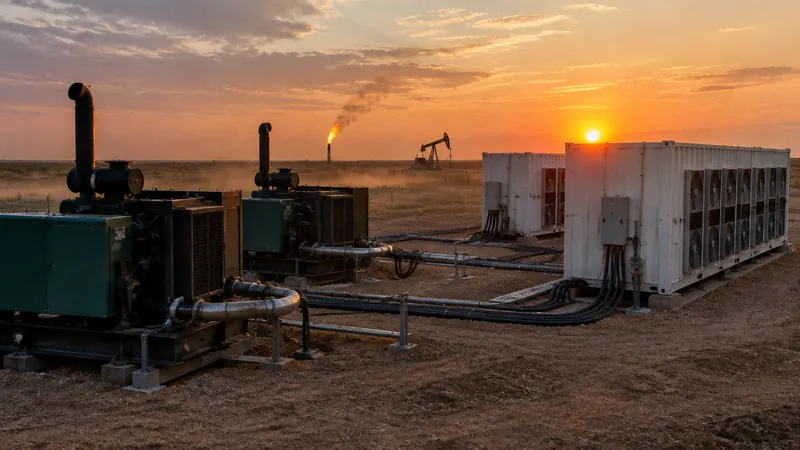
Miners buy power from the grid, generate it themselves from gas, or sit next to hydro and renewables. Each option trades price against reliability and risk. The biggest issues right now are slow grid connections, competition from AI data centers for the same power, curtailment rules, and local opposition to noise. The cheapest power on our board comes from stranded gas, but the most bankable sites are the ones with a clear, long-term power agreement.
Mining turns electricity into Bitcoin, so where the electricity comes from decides almost everything else: the price, the uptime, the risk and, increasingly, whether a site can be built at all.
The main ways miners source power
Grid power under contract. The most common option. The miner signs a retail contract or a power purchase agreement with a utility or retailer. It's reliable and simple to finance, but the price includes transmission, distribution and demand charges, and in some markets it moves with wholesale prices.
Behind-the-meter generation. The miner sits next to a power plant and takes power before it reaches the grid. That can avoid some grid charges, but it ties the site's fate to one plant.
Stranded and flare gas. At oil fields, gas that can't easily reach a pipeline is often flared. Miners bring generators and containers to the well and turn that gas into electricity on site. It's some of the cheapest power available: the lowest public prices on our board right now are gas sites in Alberta at 1.3¢ and 2.2¢/kWh. The trade-offs are gas supply that can decline, generator maintenance and remote logistics.
Hydro. Long-term, low-carbon and often cheap, especially in Scandinavia, Canada, Ethiopia and parts of South America. But seasonal: dry seasons can mean less power, or higher prices.
Wind and solar. Cheap when the wind blows and the sun shines, which is the problem. Miners pair with renewables to absorb power that would otherwise be curtailed, and switch off when it isn't available.
The issues shaping the market
Grid connections take years. In many regions, the queue of projects waiting to connect to the grid has grown much faster than utilities can build. A site with power already connected, or a signed agreement for it, is worth far more than land without one.
AI wants the same power. AI and high-performance computing need exactly what miners spent a decade building: large amounts of power at industrial sites. That competition pushes up the price of powered land and hosting, and some miners now convert part of their capacity to AI.
Curtailment is a business model, and a risk. In markets like Texas, miners can earn credits by switching off when the grid is stressed. Done well, that helps the grid and the miner. Done badly, a contract can force a site offline at the worst moments. Read the curtailment terms as carefully as the price.
Noise and local rules. Air-cooled miners are loud, and several communities have pushed back with noise limits, zoning changes or tighter permits. Distance from homes, immersion cooling and good relations with neighbours matter more than they used to.
Taxes and policy. Some countries welcome mining as a buyer of surplus power; others tax or restrict it. A cheap rate in an unstable policy environment can cost more over a contract than a slightly higher rate somewhere predictable.
How to judge a power source
| Question | Why it matters |
|---|---|
| Is the power energized today? | "Available" power can be years away |
| Fixed or floating price? | Floating prices can spike in heat waves |
| How long is the contract? | A short contract can be repriced against you |
| What are the curtailment terms? | Who decides when you switch off, and who gets paid |
| How reliable is the supply? | Gas decline, dry seasons and grid outages all cost hashrate |
| What's the local and national policy? | Rules can change faster than a machine pays off |
The bottom line
The cheapest power isn't always the best power. The sites that last combine a competitive price with reliable supply, a clear contract and a location where mining is welcome. When you compare sites or hosting offers, compare the power behind them as carefully as the price per kWh.
CryptoSites.io is a marketplace for powered land, mining sites and hosting capacity worldwide. Prices mentioned are from listings on cryptosites.io in October 2026 and can change at any time. This is not financial advice.
Looking for a mining site or hosting?
Browse powered land, mining sites and hosting worldwide. A free account opens the full details of our highlighted sites.
Keep reading
All of Miners Digest →
What the Bitcoin Halving Means for Mining, and How to Prepare for the Next One
Every four years, the reward for mining a block is cut in half overnight. Here's what that does to miners' revenue, which machines survive it, and what to do before the next halving around 2028.
How AI Can Optimize Bitcoin Mining (and Where It's Just Hype)
From per-chip tuning to pool selection, power-price forecasting and predicting failures, here's where data-driven automation genuinely helps miners today, and where "AI mining" is a sales pitch.
Powered Land Is Becoming the Scarcest Asset in Compute
Chips can be ordered and buildings can be built. Megawatts on the grid can take years. That's why Bitcoin miners and AI builders are now chasing the same land.