Beyond Bitcoin: Should Your Hosting Site Mine Zcash and Other Coins?
A large Zcash miner is placing a nine-figure order for new machines. Here's what multi-coin mining can and can't do for hosting providers and site owners, and how to decide if it belongs on your floor.

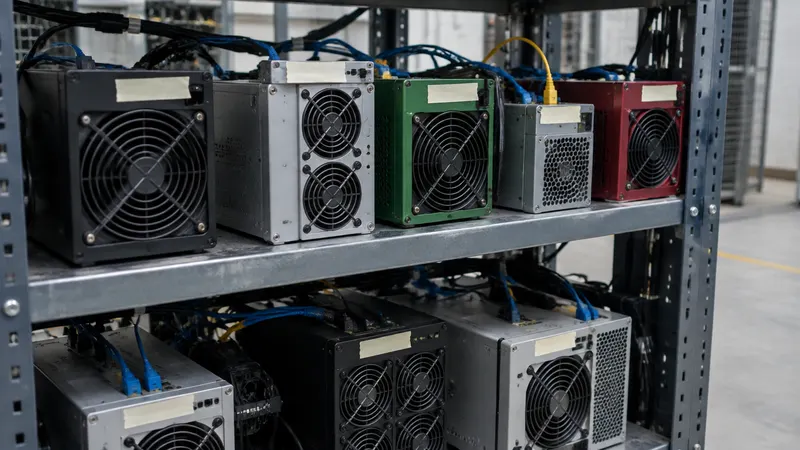
Fleets mining coins other than bitcoin need hosting too, and recent Zcash orders show that demand is real. Adding a second or third algorithm can spread a hosting site's risk across different markets. But smaller networks bring thinner liquidity, fewer hardware makers and sharper price swings. Use other coins to fill part of a site, not to replace bitcoin: bitcoin is still the only coin that can absorb a whole large site.
Most hosting sites are built around one machine type: the bitcoin ASIC. That keeps operations simple. It also means every customer on the site rises and falls with the same coin, the same difficulty and the same hashprice.
Some hosting providers and site owners are now asking whether a slice of their capacity should go to other coins. Zcash is the clearest current example.
A large Zcash order
Fortitude has signed a non-binding deal for up to $100M of next-generation Bitmain Zcash miners, shipping from Q2 2027. It has also placed a binding order for 9,000 Antminer Z15 Pros for about $31.5M, with 3,000 machines due in October and 6,000 in November.
Fortitude mined 72,696 ZEC in the first half of 2026, about 28% of the network's production. That's one operator holding a large share of one network. We'll come back to why that matters.
For hosting providers, the takeaway is simple. Fleets of this size need power, racks and technicians somewhere. Not all of it will sit on the operator's own sites.
The machine in numbers
The Antminer Z15 Pro is rated at 840 KSol/s at about 2,780 W on stock firmware. Hashrate Index tested it on LuxOS and found about 961 KSol/s sustained, a 14.4% increase.
Its model put the extra profit from that overclock at about $4.77 per machine per day. That assumed a ZEC price of $1,200, a network hashrate of 31 GSol/s and an electricity cost of $0.07/kWh. On those assumptions the overclock stayed profitable up to an electricity cost of about $0.23/kWh.
Two points stand out for site owners. First, each unit draws under 3 kW at stock, a little less than many current bitcoin machines. Second, every one of those numbers depends on a single coin's price and a single network's hashrate. Change either and the result changes.
Why multi-coin can work as a hedge
Bitcoin, Zcash and other mined coins don't always move together. Their difficulty, fees and hardware cycles differ. A site that hosts more than one algorithm can:
- Win customers bitcoin-only sites turn away. Fleets mining other coins still need cheap, reliable power.
- Spread revenue risk. If bitcoin hashprice drops, customers on another coin may not be under the same pressure at the same moment.
- Use awkward capacity. A small hall, a spare transformer or a few empty racks may suit a modest non-bitcoin fleet better than a large bitcoin one.
The risks are real
Diversification only helps if you understand what you're adding.
| Risk | Why it matters for a hosting site |
|---|---|
| Liquidity | Smaller coins trade in thinner markets. Customers selling coins to pay hosting bills can be hit harder by price moves. |
| Smaller networks | A large new fleet can move difficulty fast, cutting every miner's share, including your customers'. |
| Single-maker hardware | If one manufacturer makes nearly all the machines, parts, firmware and repairs depend on that one supplier. |
| Price swings | Smaller coins often swing more than bitcoin. Customers can go from profitable to switched-off quickly. |
| Concentration | When one operator mines a large share of a network, as Fortitude does with ZEC, its decisions shape the economics for everyone else. |
For a hosting provider, all of these turn into one practical risk: a customer who stops paying or asks to leave early.
Bitcoin still carries the big sites
Bitcoin's network is far larger and its market far deeper than any other mined coin. That is why it remains the only coin that can absorb the capacity of a whole large site. Fill a 100 MW site with machines for a small network and you could become a big part of that network yourself, with all the concentration risk that brings.
The sensible approach for most sites is a bitcoin core with a measured share of other coins. Size that share so the site would still be healthy if those customers left.
What site owners should check
- Power per unit and per rack. Plan circuits and breakers around the actual draw of each model, including overclocked settings.
- Heat and noise. Different machines have different airflow and noise profiles. Check they suit your cooling layout and any neighbours.
- Spare parts and repair skills. Make sure your technicians, or the customer, can repair each model on site.
- Contract terms. Ask for deposits, prepayment or shorter notice periods for smaller coins, to reflect the higher risk of a customer switching off.
- Curtailment and switch-off rules. Agree in writing what happens when a coin falls below a customer's break-even electricity cost.
- Customer concentration. Avoid having one non-bitcoin customer take a large share of the site.
To compare profitability across coins and machines, you can check the ASIC Board.
The bottom line
Multi-coin hosting can broaden your customer base and spread risk, and Zcash shows the demand is there. But smaller coins bring smaller markets and more concentrated risks. Treat them as a complement to bitcoin, priced and contracted for their extra risk.
If you're looking for a site or capacity, compare options on the map at cryptosites.io and click a country for its electricity price, power mix, legal status and CryptoSites score. For more on running hosting well, read what a good bitcoin mining hosting provider should offer and how to calculate bitcoin miner profitability. If you have capacity to offer, our site specialists can list it through the listings desk.
CryptoSites.io is a marketplace for powered land, mining sites and hosting capacity worldwide. Figures in this article come from the public sources linked and reflect their stated assumptions; they can change at any time. Companies and products named are examples, not endorsements. This article is general information, not financial or investment advice.
Looking for a mining site or hosting?
Browse powered land, mining sites and hosting worldwide. A free account opens the full details of our highlighted sites.
Keep reading
All of Miners Digest →
Public Miners Unplugged Over a Billion Dollars of Machines. Here's Where the Power Went
Listed Bitcoin miners shrank their fleets in the first half of 2026 and wrote down about $1.1 billion of assets. The megawatts did not disappear. They moved, and that matters for anyone buying or selling a site.
Google's €13 Billion Finland Plan Just Hit a Permit Wall. Here's the Lesson for Every Site Buyer
Google committed €13 billion to Finnish data centers, then a regulator ordered work to stop at two sites. Power and money were never the problem. Permits were.
Texas Paused Data Center Permits. Why Approved Megawatts Just Got More Valuable
Texas has stopped issuing environmental permits for new data centers while the state audits power and water use. For anyone buying or selling a Texas site, the gap between approved power and planned power just got much wider.