Leasing to AI: Who Actually Gets Paid in an "AI Factory"
An AI factory turns electricity into tokens. A site owner can take a cut as landlord, host or operator. Each role pays differently, and each carries a different kind of risk.

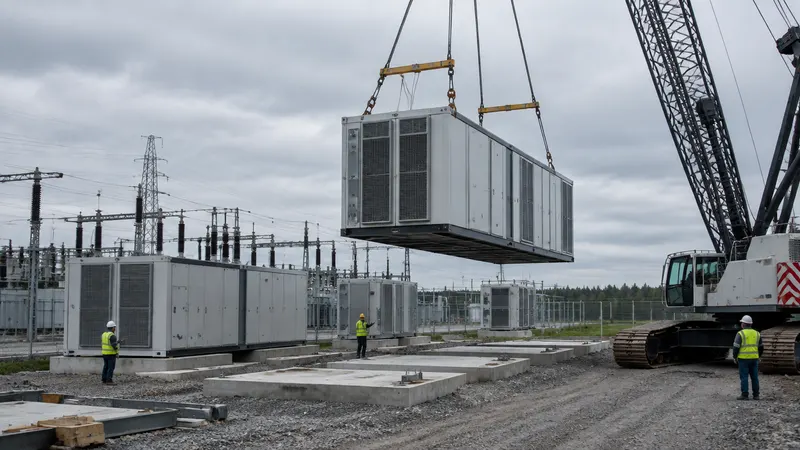
If you own a powered site, you can lease the shell, host other people's GPUs, or run the compute yourself. Landlords earn contracted rates per kW with the least capital at risk; operators sell GPU-hours and carry the most risk. If you are retrofitting a mining site, floor loading is usually the first limit you hit, then cooling, then power distribution.
"AI factory" is the new name for a data center that runs AI models at scale. Energy goes in. Tokens, the units of text and data that AI models produce, come out. The phrase is useful because it makes one point clear: the whole chain starts with electricity, and the site owner controls the electricity.
That does not mean the site owner earns the most. Who gets paid, and how much, depends on which part of the chain you choose to own. Hashrate Index lays out the split in its guide to who actually gets paid in an AI factory. Here is how it looks from the seat of someone who owns a mining site or powered land.
Three ways to earn from a powered site
There are three basic models. You can mix them across different parts of one site, but each has its own economics.
| Model | Your capex | What you sell | Main risk | Who it suits |
|---|---|---|---|---|
| Landlord (powered shell) | Lowest | Contracted rate per kW | Tenant default, long lease terms | Owners who want steady income and little operational work |
| Colocation host | Medium | Space, power and cooling for the client's GPUs | Uptime, service levels, client churn | Experienced miners with strong operations teams |
| Operator | Highest | GPU-hours to end users | GPU prices, utilization, fast hardware ageing | Well-funded teams that can find and keep compute buyers |
The landlord: lowest capex, contracted income
As landlord, you provide the land, the grid connection and usually a shell building. The tenant brings the rest. You get paid a contracted rate per kW of capacity, whether the tenant's GPUs are busy or idle.
This is the lowest-capex way into AI. You are not buying chips that lose value every quarter. You are renting the one thing that is hardest to get: energized capacity. The trade-off is that you give up the upside. If GPU rental prices rise, the tenant keeps that gain. And a long lease ties up your best asset for years, so the credit quality of the tenant matters as much as the rate.
The colocation host: more work, more upside
A colocation host goes one step further. The client owns the GPUs, but you supply the power, cooling, security and day-to-day care. Many bitcoin miners already do this for ASICs, so the business model is familiar.
The difference is the standard. AI clients expect high uptime, redundant power and fibre. A hosting site that is fine for flexible bitcoin mining may need serious upgrades before an AI client will sign. You earn more than a pure landlord, but you also take on service obligations and the risk that a client leaves.
The operator: selling GPU-hours
The operator buys the GPUs and sells compute time. This is where the revenue per MW is highest, and where the risk is highest too.
The hardware bill alone shows why. According to Hashrate Index's notes from Yotta 2026, an 8-GPU B300 node costs $544,280, or $68,035 per GPU. That compares with $40,555 per GPU for an H100. An operator has to fill those GPUs with paying work quickly, before the next generation arrives and pushes rental prices down. If utilization slips, the debt on the hardware does not.
Retrofitting a mining site: check these in order
Many owners start by asking whether an existing mining building can host GPUs. Hashrate Index's guide says the binding limit is usually floor loading first, then cooling, then power distribution. That order is a good checklist:
- Floor loading. GPU racks, especially liquid-cooled ones, are far heavier than a shelf of ASICs. Get a structural engineer to rate the slab before anything else. If the floor fails this check, the rest does not matter.
- Cooling. Mining sites are often built around air or simple immersion. Dense GPU racks usually need direct liquid cooling, with chillers, pipework and heat rejection to match. Our guide to air vs immersion vs hydro cooling covers the basics.
- Power distribution. A site may have enough MW at the substation but not the right gear inside: redundant feeds, UPS, switchgear and busway sized for AI loads. Upgrading this can take longer than expected.
If you want the full walk-through, see how to convert a bitcoin mining site to an AI data center.
Modular builds: the mining container grows up
Bitcoin miners made the shipping container a standard unit of compute. AI is now doing something similar. Hashrate Index reports that modular and prefabricated liquid-cooled data centers are now in production.
For a site owner, that changes the retrofit question. Instead of rebuilding an old hall, you may be able to place factory-built blocks on a pad next to the substation. It does not remove the need for power, cooling water and fibre, but it can shorten the timeline. It also means a site with good power and an empty pad can be as attractive as one with a building on it.
Compute is starting to trade like a commodity
Another sign of where this market is heading: CME, ICE and Nodal all have GPU-compute futures planned, though none has launched yet. The CFTC extended its review of CME's product by 45 days, citing "novel or complex" questions, according to the same Yotta 2026 report.
Money is lining up behind it too. NVIDIA has signed memorandums of understanding aimed at more than $500B of GPU-cluster financing with Apollo, BlackRock, Blackstone and others. The report also notes that AI investors are looking for miners with grid relationships in emerging markets.
Futures and big financing pools tend to appear when a product becomes standard and widely traded. If compute becomes a commodity, margins for operators may get thinner and more volatile over time. The scarce input, powered land, could hold its value better. That is an argument for owners to think hard before giving up a contracted landlord position for the operator's upside. We cover that scarcity in powered land is becoming the scarcest asset in compute.
What to do next
If you own a site and are weighing these options:
- Prove your power first. Every model depends on energized, documented capacity. Tenants and investors will ask for it on day one.
- Run the retrofit checklist before you talk to AI tenants, so you know whether you are offering a shell, a pad or a ready hall.
- Match the model to your balance sheet. If you cannot fund GPUs and carry the utilization risk, being the landlord is not a lesser choice. It may be the safer one.
- Watch the large power deals. They shape what your site is worth. Our piece on gigawatt power deals and what they mean for site buyers explains why.
To see how your site compares, browse sites on the map at cryptosites.io. Click any country to see its electricity price, power mix, legal status and CryptoSites score. If you are ready to lease or sell, list your site through the listings desk and our site specialists will be in touch.
CryptoSites.io is a marketplace for powered land, mining sites and hosting capacity worldwide. Hardware prices and market details in this article come from the sources linked above as of October 2026 and can change at any time. This is not financial advice.
Looking for a mining site or hosting?
Browse powered land, mining sites and hosting worldwide. A free account opens the full details of our highlighted sites.
Keep reading
All of Miners Digest →
Which Mining and Crypto Conferences Are Worth It If You Buy, Sell or Host Mining Sites (2026-2027)
Not every crypto conference is useful for site deals. Here is where power developers, hosting buyers and mining capital actually meet, and how to turn a few days on the floor into real conversations.
Buying a Distressed Bitcoin Mining Site: What You Are Really Buying
Bankruptcy sales, lender foreclosures and motivated sellers can offer megawatts at a discount. The discount is only real if the power contract, the permits and the equipment title come with it.
The Moratorium Map: Where US Towns and States Are Blocking Mining and AI Data Centers
Cheap electricity and a grid connection are no longer enough. Local permission has become one of the biggest risks in any US site deal, and it can change faster than a power contract.