Selling Power Back to the Grid vs Mining: When the Megawatt Is Worth More Unplugged
With hashprice near $40, some miners now earn more in the hottest hours by not mining. Here is how the math works per MWh, and which contract terms make that option worth money.

A miner on a fixed-price contract can sometimes earn more by selling its power back, or by being paid to stand ready to switch off, than by running its machines. The test is simple: compare what one MWh earns in mining with what the grid will pay for that same MWh. Riot Platforms booked about $31 million in power curtailment credits in the first half of 2026, and a smaller miner said this month that selling power back beats mining in the hottest months. Resale rights, curtailment credits and fast shutdown are now part of what a site is worth.
Our guide to curtailment risk covered what happens when the utility cuts your power. This article covers the other side: choosing to stop because the power is worth more elsewhere. That choice only exists if your contract allows it and your site can switch off fast.
Two public examples
Riot Platforms, Texas. Riot buys fixed-price power for its Rockdale site and can sell it back. Its Q1 2026 10-Q says the company may choose not to use its long-term fixed-price power and instead sell it for credits against future power costs, when spot prices make that worthwhile. The 345 MW of fixed-price power is contracted in blocks with terms ending in 2027 and 2030.
The numbers are large:
- Q1 2026: $21.0 million in total power credits, split into $13.5 million of power credits and $7.5 million of demand response credits, per Riot's Q1 production update. That compares with $7.8 million a year earlier.
- Q2 2026: $10.1 million in power curtailment credits, and $31.1 million for the first six months, per Riot's Q2 results.
One note on the sources: the 10-Q describes the full $21.0 million as credits for power resold, while the production update splits the same total into power credits and demand response credits. The total matches; the labels differ.
PowerCompute, Oklahoma and Mississippi. On 8 October, PowerCompute published its September 2026 production update. With 26 MW of interconnected infrastructure, it mined 8.1 BTC in September and earned about $89,000 from energy sales during heat-related curtailment. Energy sales for the quarter were about $312,000. CEO Bruce M. Rodgers said that in the hottest months the company can earn more by "selling that power back to the grid than by mining with it".
Keep that in proportion. At the roughly $83,900 BTC price in the release, 8.1 BTC is worth about $680,000, far more than $89,000. Selling power wins in specific hours, not across the month.
The math: mining revenue per MWh
To compare mining with selling power, put both in the same unit: dollars per MWh.
Hashprice is quoted per PH/s per day. Hashrate Index put it at $39.87 per PH/s per day on 28 September, with a 30-day average of $39.29. The same report converts this into "energy hashprice", the mining revenue per MWh, by fleet efficiency:
| Fleet efficiency | Mining revenue per MWh |
|---|---|
| Under 14 J/TH | $138 |
| 14 to 19 J/TH | $100 |
| 19 to 25 J/TH | $75 |
| 25 to 38 J/TH | $52 |
You can check this yourself. A 20 J/TH machine uses 20 kW per PH/s, so 0.48 MWh per PH/s per day. Divide $39.87 by 0.48 and you get about $83 per MWh. For live numbers at your own power price, use our ASIC Board.
A worked example
These are assumptions for illustration, not market quotes:
- A 10 MW site with a fixed-price contract at $40 per MWh
- A fleet at 20 J/TH, so mining earns about $83 per MWh at current hashprice
- The contract lets the site resell unused power at the real-time price, and the site can shut down within minutes
- Pool fees, hosting fees and wear are ignored to keep it simple
You pay $40 per MWh either way. So the real choice is between $83 of mining revenue and the spot price you get for reselling. Above about $83 per MWh, selling wins.
At $30 per MWh, you mine. In a hot evening hour at $500 per MWh, the 10 MW site can sell 10 MWh for $5,000, against about $830 of mining revenue. That one hour earns about six times what mining would.
Two things change the break-even. A more efficient fleet raises it (around $138 per MWh for the best machines), so new machines switch off less often. A falling hashprice lowers it, so older fleets have a reason to sell power more often. This is why flexibility matters most when margins are thin, as we covered in hashprice at $40.
ERCOT basics: three ways to get paid for flexibility
ERCOT, the Texas grid operator, is the clearest market for this. Its Grid Insights paper on demand response (December 2025) sets out three categories:
- Emergency Response Service (ERS). Participants are paid to be available to cut load within 10 to 30 minutes in a grid emergency. ERCOT procures it four times a year. It is deployed when fast-response reserves fall below 3,000 MW, and ERCOT counts 11 deployment events since 2007. Most of the value is the standby payment.
- Load Resource participation. Large loads can sell ancillary services. A Controllable Load Resource is dispatched in real time by ERCOT, ramping up or down. Riot's 10-Q notes it is paid for ancillary services whether or not it is actually called.
- Voluntary load response. You cut use when prices are high. ERCOT pays nothing directly; you save through your own contract, or earn resale credits if your contract allows.
4CP: the summer peak that sets next year's bill
ERCOT also charges transmission costs to large loads using "four coincident peaks" (4CP): the single highest 15-minute interval of demand in each of June, July, August and September. Your average demand in those four intervals sets your transmission charge for the next year.
As TheEnergyMag reported in June, analysts at LoD estimate full 4CP exposure at roughly $50,000 per MW per year, or about $5.70 per MWh for a load that runs all the time. For a 10 MW site that is about $500,000 a year. Running through just one of the four intervals could cost roughly a quarter of that. The official peak is only known afterwards, so miners curtail on forecasts.
These rules may change. A Texas Public Utility Commission draft report from March 2026 recommends moving to more coincident peaks, measuring them over longer intervals, and making large loads pay a minimum demand charge based on contracted peak demand for 10 to 15 years. SB 6 requires the Commission to amend its rules by 31 December 2026. If 4CP savings are in a seller's projections, ask how they hold up under those proposals.
Contract terms that make a site valuable
The power is only worth reselling if the paper allows it. Look for:
- Resale or buyback rights. Can you sell unused fixed-price power back, and at what price: real-time, day-ahead, or a formula? Who keeps the spread?
- Curtailment credits. Are credits paid in cash or only against future bills? Do they expire? Riot's are credits against future power costs.
- Ancillary service rights. Can the site register as a Load Resource or join ERS, and through which Qualified Scheduling Entity? Who keeps the payments?
- Shutdown speed. Can the site actually drop load in 10 minutes, or under ERCOT dispatch in real time? Rules on paper are worthless if the hardware cannot respond.
- Hosting splits. In a hosting contract, who earns the credits when your machines are switched off: you or the host?
- Term and assignment. Do these rights pass to a buyer, and how long do they last? Riot's blocks end in 2027 and 2030; check yours.
What a buyer should ask
- A monthly history of curtailment hours, credits earned and 4CP charges for the last two years
- The exact resale and credit clauses, not a summary
- Ancillary service registrations and who holds them
- Shutdown test records or dispatch logs
- How projections change if 4CP becomes 12CP, or if a minimum demand charge applies
Our guide on how to evaluate a bitcoin mining site covers the rest of the checklist.
For buyers and owners
A site used to be valued on megawatts and price per kWh. With hashprice near $40, a third number matters: what the site earns when it is not mining.
For buyers: ask what the megawatt earns in its best hours, and whether those rights transfer to you.
For owners: if your site has resale rights, a credit history and proven fast shutdown, show it with real numbers. That is revenue a buyer can verify.
Compare sites by country on the map at cryptosites.io, or list a site or hosting capacity through the listings desk.
CryptoSites.io is a marketplace for powered land, mining sites and hosting capacity worldwide. Facts in this article come from the public sources linked above as of 9 October 2026. The worked example uses stated assumptions, not market quotes, and ERCOT rules are under review. This is not financial or legal advice; have a lawyer and an energy adviser review any power or hosting contract before you sign.
Looking for a mining site or hosting?
Browse powered land, mining sites and hosting worldwide. A free account opens the full details of our highlighted sites.
Keep reading
All of Miners Digest →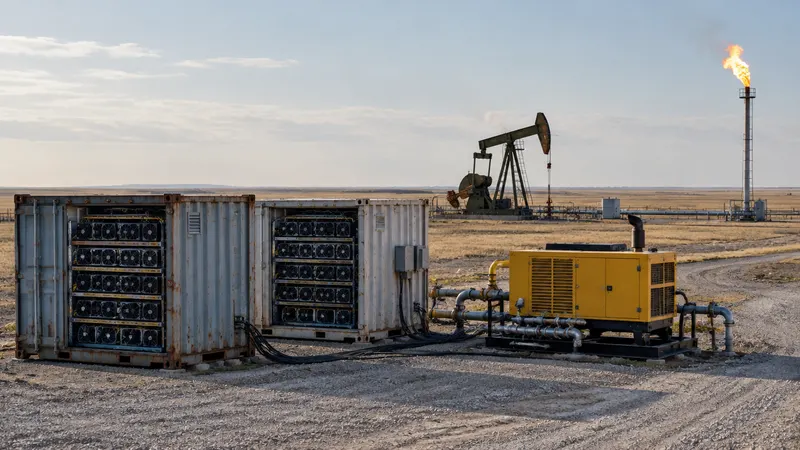
Flare Gas Mining Sites: How They Work and What to Check Before You Buy or Host
Gas that would be burned at the well can run generators and mining containers instead. The power is cheap, but the site lives or dies on gas volume, gas quality and the contract with the producer.
The Gigawatt Rush: What 1 GW Power Deals Tell Smaller Site Buyers
Large developers are signing gigawatt power agreements that will not deliver until 2028 or later. That long wait is exactly why an energised 5 to 50 MW site today is worth so much.
Big Tech Is Buying the Grid: How Miners Compete When Hyperscalers Want the Same Power
Hyperscalers can pay many times more per MWh than a bitcoin miner. On firm grid power, miners will usually lose that contest. Off the main road, they still have real advantages.