Flare Gas Mining Sites: How They Work and What to Check Before You Buy or Host
Gas that would be burned at the well can run generators and mining containers instead. The power is cheap, but the site lives or dies on gas volume, gas quality and the contract with the producer.

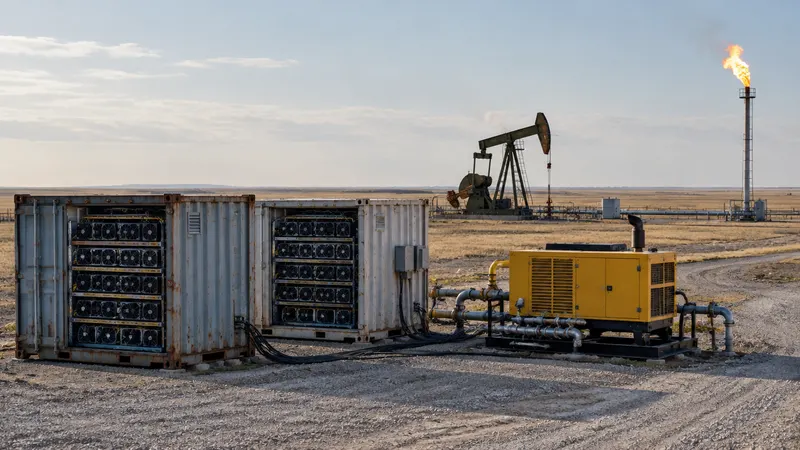
At many oil wells, the gas that comes up with the oil has no pipeline to go to, so it is flared. A flare gas mining site puts a generator next to the well and runs mining containers on that gas. Producers like it because flaring is limited and regulated, and in some places it costs them royalties. Miners like it because the gas itself is often very cheap. The real costs are generators, maintenance, remote operations and a gas supply that declines over time. Before you buy or host, verify the gas volume and decline curve, the gas composition, the contract terms, the generator uptime and the permits.
We covered the main ways miners source power in Energy Sourcing for Bitcoin Mining in 2026. This article goes deep on one of them: stranded and flare gas. It is some of the cheapest power in mining, and some of the easiest to get wrong.
The scale of the problem
Flaring is not a niche issue. According to the World Bank's 2026 Global Gas Flaring Tracker, the world flared 167 billion cubic meters of gas in 2025, the highest level since 2019 and the third yearly increase in a row. The World Bank puts the value of that wasted gas at about US$54 billion.
Enerdata's summary of the same report says volumes rose 6%, and that nine countries (Russia, Iran, Iraq, Venezuela, Mexico, Libya, Algeria, Nigeria and the United States) made up 83% of global flaring. The United States had the largest absolute cut of any country in 2025, about 0.4 bcm, according to the World Bank.
Flares are also less clean than they look. Crusoe, citing a University of Michigan study published in Science that surveyed more than 300 US flares, notes that flares destroyed on average only 91.1% of the methane sent to them. The rest escapes as methane, a much stronger greenhouse gas than CO2.
How a flare gas site works
The setup is simple in principle:
- Wellhead gas. Associated gas leaves the separator at the well pad. Instead of going to the flare stack, part or all of it is routed to the mining site.
- Gas conditioning. Depending on the gas, it may need scrubbing, liquids removal or pressure control before it can feed an engine.
- Generator. A gas engine or turbine generator turns the gas into electricity on site.
- Containers. Mining containers sit next to the generator and take the power directly. No grid connection, no utility bill.
The equipment is modular and built to move. When it agreed in March 2025 to sell its Bitcoin mining business, including its flare gas operations, to NYDIG, the deal covered more than 425 modular data centers and 270 MW of power generation across seven US states and Argentina, as reported by Cointelegraph. Crusoe said it was leaving mining to focus on AI.
Crusoe says its engines reach a combustion efficiency of up to 99.9%, cutting methane by roughly 99% compared with flaring. That is the company's own figure, not an independent field measurement, so treat it as a best case.
Why producers say yes
A producer does not host miners out of charity. Three things push them toward it.
Flaring limits. In Texas, the Railroad Commission's Statewide Rule 32 allows flaring while drilling and for up to 10 days after completion for well testing. After that, operators need an exception, issued for 45 days at a time up to a maximum of 180 days. Going further needs a Commission order and proof of progress toward infrastructure.
In North Dakota, the Industrial Commission has set a gas capture goal of 91% since November 2020. The state's Director's Cut for June 2026 reports statewide capture of 95.5% for April 2026 production, with 161.9 million cubic feet per day still flared. In Alberta, the Energy Regulator's Directive 060 sets the rules for flaring, incinerating and venting at all upstream wells and facilities. The current edition took effect on 27 March 2026.
Royalties. On US federal and tribal leases, the Bureau of Land Management's 2024 Waste Prevention Rule makes producers pay royalties on gas that is wasted through avoidable flaring. BLM's fact sheet estimated about $51 million a year in extra royalties. The rule is unsettled: a federal court has barred enforcement in North Dakota, Texas, Montana, Wyoming and Utah while litigation continues, and BLM has delayed some flare deadlines to December 2026, according to BLM's rule page. Gas used on site for a productive purpose is a cleaner story for the producer either way.
Methane. Producers are under pressure to cut methane. A metered, productive use of the gas helps.
The economics
The gas is often the cheapest part of the deal. Some producers give it away to avoid flaring, some charge a small fixed fee, and some take a share of revenue. That is why the lowest prices on our board come from gas sites.
The real costs sit elsewhere:
- Generators. Buying or leasing gensets is the largest upfront cost after the miners.
- Maintenance. Gas engines need oil changes, spark plugs and overhauls on a fixed schedule. Dirty gas shortens all of these.
- Conditioning. Scrubbers, separators and filters cost money and need service.
- Remote operations. Travel, technicians, spare parts and connectivity at a remote pad add up.
- Moving. When the gas runs short, the equipment has to go somewhere else.
A cheap gas price with poor uptime can cost more per terahash than a higher grid price with steady power. Always compare on cost per unit of output, not price per kWh alone.
What to verify before you buy or host
Gas volume and decline curve. Ask for metered gas volumes, not estimates, for at least the last six to twelve months. Shale wells decline, often fastest in the first years. Ask the producer for their own decline forecast and whether new wells will tie into the same pad. A site sized for today's gas may be oversized in two years.
Gas composition. Ask for a recent gas analysis. Hydrogen sulphide (H2S) is the big one: it corrodes engines and is a serious safety hazard for staff. Heavy hydrocarbons and liquids can damage engines and change their output. The analysis decides what conditioning you need and how often you will service the engines.
The contract with the producer. Read it as carefully as a power purchase agreement:
- term, and what happens at the end
- price for the gas, fixed or variable
- whether there is a take-or-pay obligation on either side
- who pays for conditioning, metering and maintenance
- what happens when the producer shuts in the well for workovers or low oil prices
- whether the producer can terminate if a pipeline arrives
- who owns the equipment on the pad
Generator uptime. Ask for actual uptime logs, not nameplate ratings. Who services the generators, how fast, and where are the spare parts kept? A generator down for a week costs a week of hashrate.
Mobility. Are the containers and gensets skid-mounted and road-legal? Is there a plan, and a budget, for moving to the next pad?
Permits and air quality. A generator is an emissions source. Check the air permit, whether it is in the producer's name or yours, and whether it transfers. Check land use, setbacks and noise rules too. Our guide on how to evaluate a Bitcoin mining site covers the wider permit checklist.
Remote operations and security. Remote sites need reliable connectivity (often satellite), remote monitoring and cameras. Ask about theft history and who responds if something goes wrong at 3 a.m. Cooling matters too: hot, dusty pads are hard on air-cooled machines, which is why some gas operators use immersion. We compared the options in air vs immersion vs hydro cooling.
The exit plan. Every well declines. Agree in writing what happens when gas falls below what the site needs: do you scale down, bring in gas from nearby wells, or move? Who pays for the move?
Quick checklist
| Check | Ask for |
|---|---|
| Gas volume | 6 to 12 months of metered data |
| Decline | Producer's forecast for the next 2 to 3 years |
| Composition | Recent gas analysis, especially H2S and liquids |
| Contract | Term, price, take-or-pay, shut-in and termination terms |
| Maintenance | Who pays, who services, spare parts on site |
| Uptime | Real logs, not nameplate |
| Permits | Air permit, land use, noise; who holds them |
| Security | Connectivity, monitoring, response plan |
| Exit | Written plan for when the gas declines |
For buyers and owners
For buyers: flare gas can deliver some of the lowest power costs in mining, but you are buying a gas supply and a contract, not just a site. Get the data in writing and price in the decline.
For owners and producers: if you have gas with nowhere to go, document it well. Metered volumes, a gas analysis and a clear contract template make a site far easier to sell or lease.
Compare gas and grid sites on the map at cryptosites.io, or list a site with stranded gas through the listings desk.
CryptoSites.io is a marketplace for powered land, mining sites and hosting capacity worldwide. Facts in this article come from the public sources linked above as of 9 October 2026; rules on flaring and royalties are changing and differ by state and country. This is not legal or financial advice.
Looking for a mining site or hosting?
Browse powered land, mining sites and hosting worldwide. A free account opens the full details of our highlighted sites.
Keep reading
All of Miners Digest →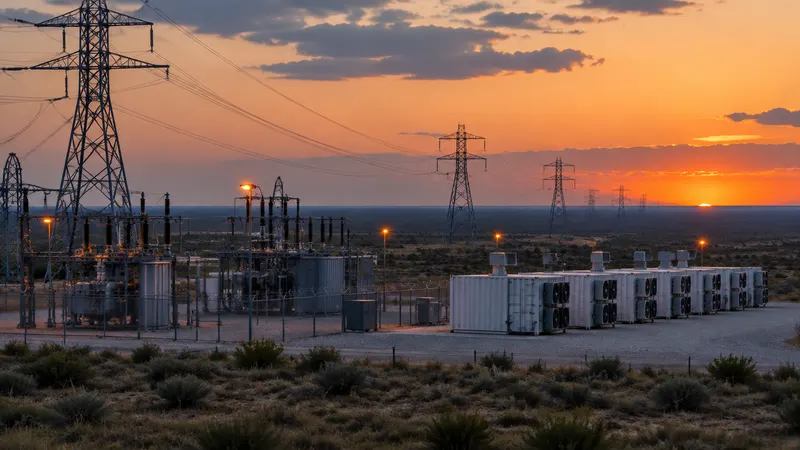
Selling Power Back to the Grid vs Mining: When the Megawatt Is Worth More Unplugged
With hashprice near $40, some miners now earn more in the hottest hours by not mining. Here is how the math works per MWh, and which contract terms make that option worth money.
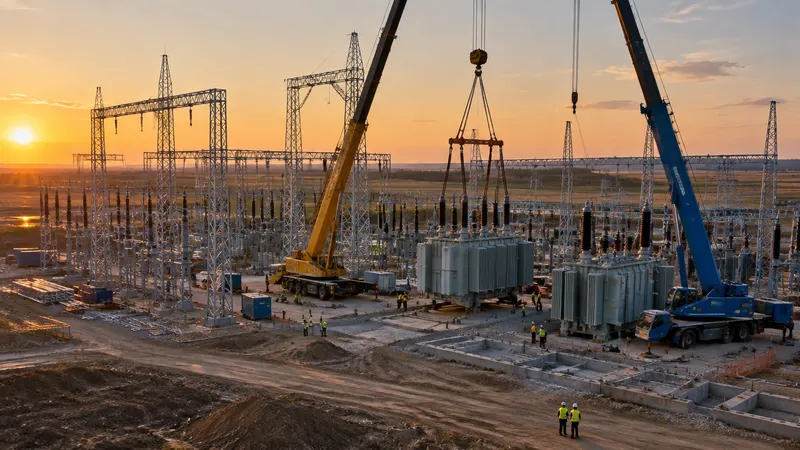
The Gigawatt Rush: What 1 GW Power Deals Tell Smaller Site Buyers
Large developers are signing gigawatt power agreements that will not deliver until 2028 or later. That long wait is exactly why an energised 5 to 50 MW site today is worth so much.
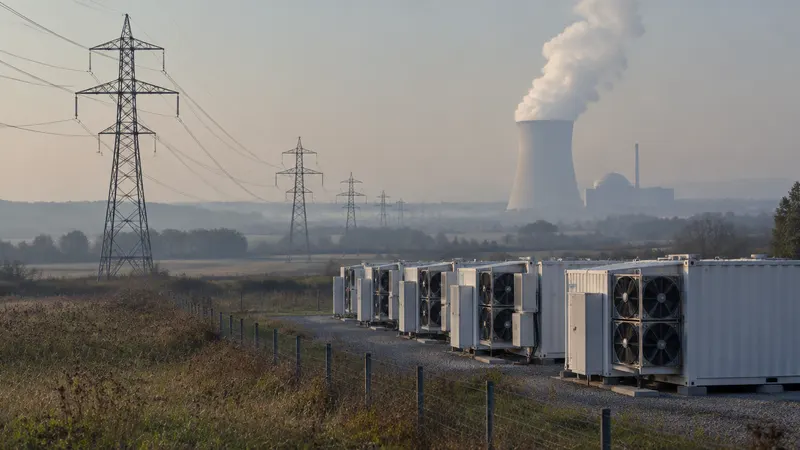
Big Tech Is Buying the Grid: How Miners Compete When Hyperscalers Want the Same Power
Hyperscalers can pay many times more per MWh than a bitcoin miner. On firm grid power, miners will usually lose that contest. Off the main road, they still have real advantages.